Gopher Damage to Irrigation and Sprinkler Systems: Signs, Repairs and Prevention
Damage & Yard Problems
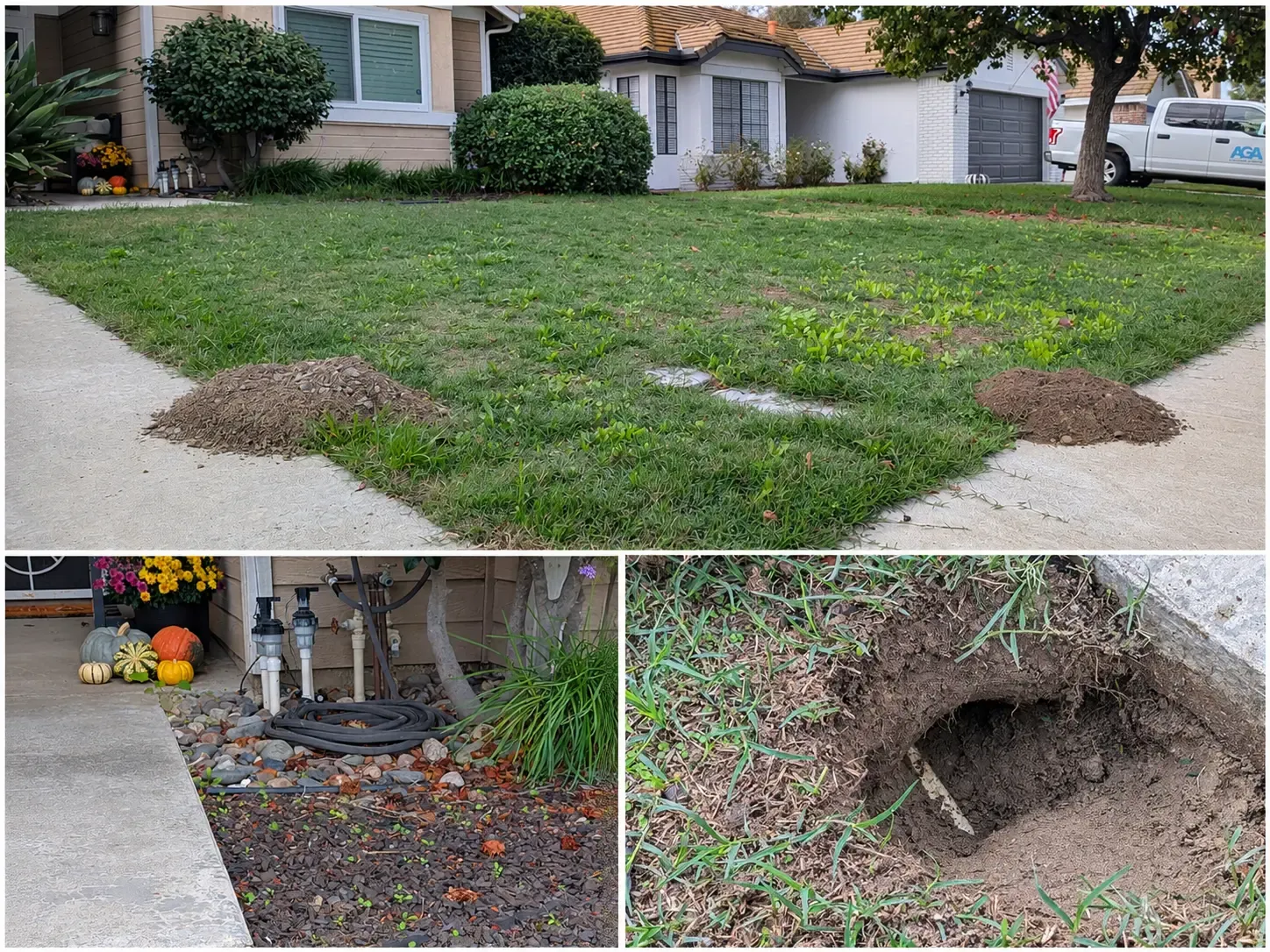
A gopher can cause serious landscape damage without ever being seen above ground.
While gopher mounds are easy to recognize, damage to underground irrigation and sprinkler systems can remain hidden until plants begin dying, sprinkler zones stop working properly or water appears where it shouldn't.
Gopher Stop regularly encounters damaged drip irrigation tubing, occasional damage to rigid PVC sprinkler pipes and irrigation valve boxes packed with excavated soil throughout Southern California.
The most expensive damage isn't always the broken irrigation or sprinkler line itself. Sometimes an entire drip irrigation system needs replacement, along with plants that died because they weren't receiving water.
Quick Answer: Can Gophers Damage Irrigation and Sprinkler Pipes?
Yes. Gophers can damage underground irrigation and sprinkler systems by chewing through flexible drip tubing, occasionally damaging rigid PVC sprinkler pipes and excavating soil around buried irrigation infrastructure.
According to Gopher Stop's field experience, flexible drip irrigation tubing is damaged much more frequently than rigid PVC sprinkler pipe. Gophers also commonly fill irrigation and sprinkler valve boxes with excavated soil.
Undetected damage can interrupt watering, kill valuable plants and create substantial repair expenses.
Why Do Gophers Follow Underground Irrigation and Sprinkler Pipes?
Gophers naturally tunnel through underground environments where plant roots provide food and vegetation provides moisture.
In Gopher Stop's field observations, gophers frequently travel along buried infrastructure, including electrical wires, sprinkler pipes, flexible drip irrigation lines and water mains.
Aaron Correll of Gopher Stop has observed that these routes resemble the way gophers encounter and follow underground root systems.
This is a field-based explanation of the behavior, not a claim that gophers can detect water flowing inside a pipe or that every buried pipe attracts them.
The practical consequence is important: irrigation and sprinkler lines and other buried infrastructure can become locations where gopher activity and expensive landscape damage intersect.
The Most Common Irrigation Damage: Chewed Drip Tubing
Flexible drip irrigation systems are especially vulnerable to gopher damage.
Gopher Stop frequently encounters drip irrigation lines that have been chewed through underground.
Unlike a visible broken sprinkler head, damage to buried drip tubing may remain unnoticed until plants begin showing signs of water stress.
A damaged line can interrupt water delivery to some plants while allowing water to escape underground.
Why the Damage Can Become Expensive
The cost can extend well beyond replacing a short section of tubing.
In more serious cases, Gopher Stop encounters properties where:
- Multiple drip irrigation lines have been damaged.
- Large portions of the irrigation system need replacement.
- Newly installed plants have died because they stopped receiving water.
- Landscape maintenance crews must locate and repair underground damage.
- Replacement plants and additional landscaping work create further expenses.
Can Gophers Chew Through PVC Sprinkler and Irrigation Pipes?
Yes, although Gopher Stop encounters damage to rigid PVC sprinkler pipes less frequently than damage to flexible drip irrigation tubing.
Rigid sprinkler pipes are more resistant to chewing than flexible irrigation lines, but damage can still occur.
When a sprinkler zone loses pressure, stops delivering water or develops an unexplained underground leak, a damaged pipe is one possible cause.
Not every irrigation or sprinkler leak is caused by gophers. Aging materials, installation problems, tree roots and other factors can also damage underground pipes.
A qualified irrigation professional should inspect the system to identify the actual cause.
Why Are Irrigation and Sprinkler Valve Boxes Filled With Dirt?
This is one of the most distinctive problems Gopher Stop encounters.
Gophers can excavate soil around buried irrigation infrastructure and push that soil into irrigation and sprinkler valve boxes.
Gopher Stop frequently finds valve boxes partially or completely filled with gopher dirt.
This can occur with both above-ground and below-ground valve-box installations.
What to Look For
- A valve box unexpectedly packed with soil.
- Fresh dirt appearing around or inside the box.
- Valves or fittings buried beneath excavated soil.
- New gopher mounds near the irrigation system.
- Recurring soil accumulation after the box has been cleaned.
A dirt-filled irrigation valve box is an important reason to inspect the surrounding landscape for active gopher tunnels.
ORIGINAL FIELD PHOTOGRAPHY • GOPHER STOP
Gophers Can Follow Water Service Lines All the Way to the Street
Gopher activity around buried pipes isn't limited to sprinkler and drip irrigation systems.
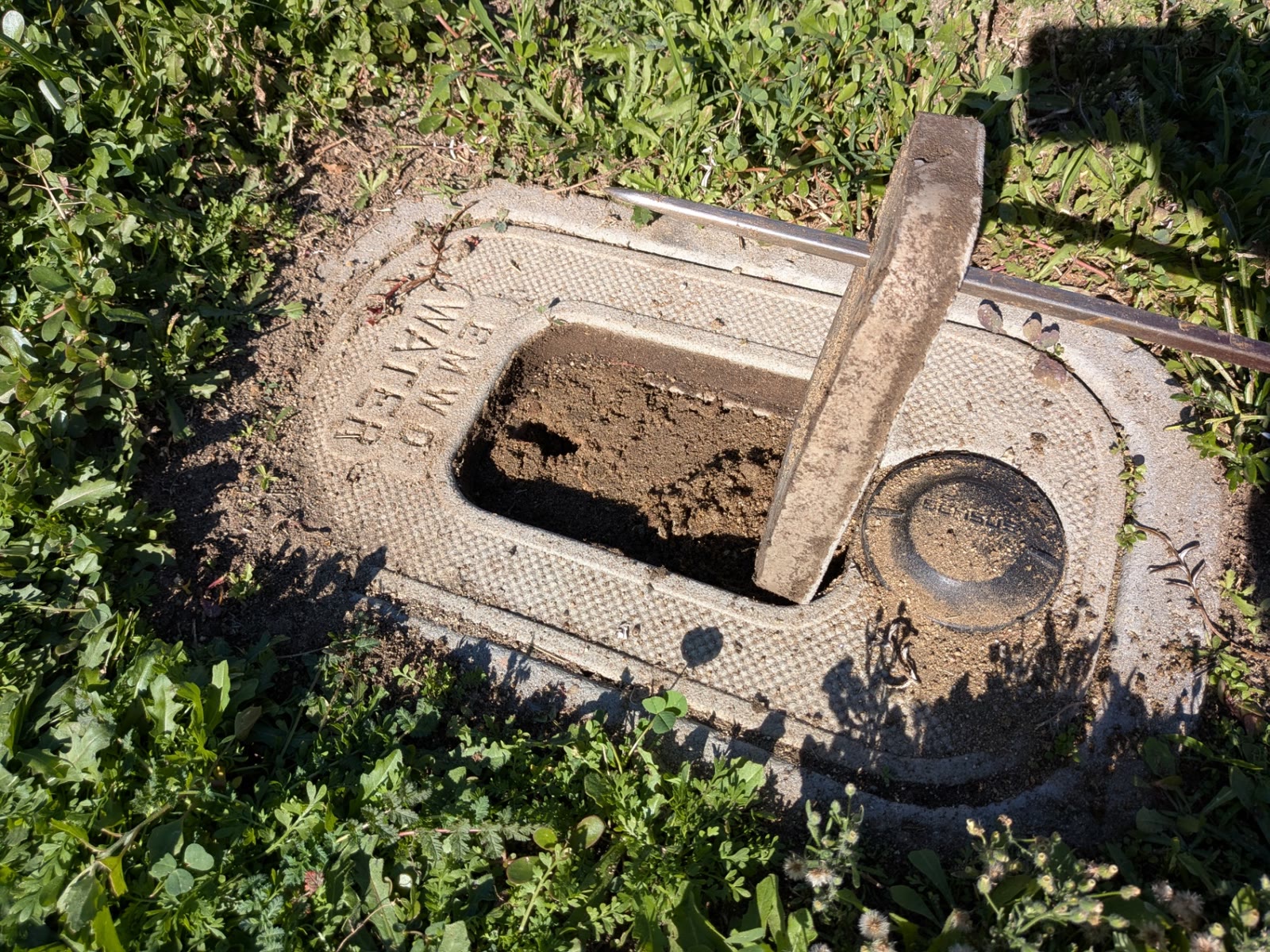
Gopher Stop has encountered gophers traveling along underground water service lines between homes and street-side water meters.
In some cases, the gophers excavate enough soil to fill much of the water meter box.
The original photograph and video below document a water meter box containing a substantial accumulation of excavated soil associated with gopher activity.
Why This Matters
Some residential water service lines are made from PVC or other plastic materials rather than metal.
Although soil inside a meter box doesn't prove the water line has been damaged, gopher activity around buried water infrastructure deserves attention.
Gopher Stop has observed that gophers frequently travel alongside buried pipes and other underground objects.
These observations reinforce an important point: a gopher problem may extend well beyond the visible dirt mounds in a lawn.
Original Field Photo
Original Field Video
Watch: Soil Accumulation Inside a Water Meter Box
Original Gopher Stop field footage showing a street-side water meter box with a substantial accumulation of soil.
Can Gophers Damage PVC Water Service Lines?
Gophers can damage some buried plastic piping, but the likelihood depends on the pipe material, installation and circumstances.
Gopher Stop encounters damage to flexible drip irrigation tubing far more frequently than damage to rigid PVC.
The presence of gopher soil in a water meter box is evidence of nearby underground activity, not proof that the water service line has been chewed or broken.
If a leak or damage to the water service line is suspected, contact the water utility or a qualified plumbing professional.
Do not excavate around or attempt to repair utility-owned water meter equipment.
Video: Gopher Damage Around Underground Irrigation and Sprinkler Infrastructure
Gopher Stop documents real underground gopher activity and the problems it creates around buried landscape infrastructure. This original field video provides a closer look at the issue.
The Hidden Cost of Gopher Damage on Commercial Properties
Gopher damage to irrigation and sprinkler systems can be particularly expensive for commercial landscapes.
Gopher Stop frequently encounters commercial properties where gophers have chewed through drip irrigation lines, interrupting water delivery and causing plants to die.
For property managers, HOAs and landscape maintenance companies, the resulting expenses can include:
- Locating damaged underground tubing.
- Repairing or replacing sections of irrigation systems.
- Replacing dead shrubs and other landscaping.
- Additional labor from landscape maintenance crews.
- Restoring the appearance of professionally maintained areas.
A small animal can create a much larger maintenance expense when irrigation damage goes undetected.
Why Early Detection Matters
When landscape maintenance crews notice unexplained plant decline, gopher activity should be considered alongside other possible irrigation and plant-health problems.
Identifying active gophers and repairing damaged irrigation lines promptly may prevent additional losses. Learn more about commercial gopher control for HOAs, property managers and landscape maintenance companies.
Warning Signs of Gopher Damage to Irrigation and Sprinklers
Gopher damage isn't always the cause of an irrigation or sprinkler problem, but these signs warrant closer inspection:
- Plants suddenly wilting or dying despite scheduled watering.
- A drip irrigation zone that no longer waters correctly.
- Unexpectedly wet soil or water pooling near buried lines.
- Reduced sprinkler performance or unexplained pressure loss.
- Fresh gopher mounds near irrigation infrastructure.
- Irrigation valve boxes filled with dirt.
- Water meter boxes containing newly excavated soil.
- Repeated irrigation repairs in an area with active gophers.
What to Do if a Gopher Damages Your Irrigation or Sprinkler System
Step 1: Identify the Irrigation Problem
Inspect visible components and check for signs of water loss or interrupted irrigation.
If an underground leak is suspected, arrange an inspection by a qualified irrigation professional.
Step 2: Look for Active Gopher Activity
Check the surrounding landscape for fresh mounds, active tunnels and excavated soil around irrigation or valve-box locations.
Step 3: Remove the Active Gophers
Repairing the irrigation system without addressing active gophers may leave the repaired system vulnerable to additional damage.
Gopher Stop uses strategic, poison-free underground gopher trapping to remove active gophers. Learn more about professional gopher removal.
Step 4: Repair the Irrigation and Sprinkler System
Have damaged tubing, pipes and related components repaired or replaced as necessary.
For extensive drip irrigation damage, portions of the system may need to be rebuilt.
Step 5: Monitor for New Activity
Continue checking for fresh gopher activity and signs of irrigation trouble.
Properties bordering open land, greenbelts or other established gopher habitats may experience new gophers entering the landscape. Ongoing gopher control can help.
Can You Prevent Gopher Damage to Irrigation and Sprinkler Lines?
No single preventive measure guarantees that gophers will never damage buried irrigation and sprinkler infrastructure.
Practical steps include:
- Remove active gophers before installing new landscaping and irrigation.
- Inspect new planting areas for gopher activity.
- Monitor irrigation performance and plant health.
- Check valve boxes periodically for newly excavated soil.
- Discuss suitable protective routing and materials with a qualified irrigation installer.
- Respond promptly when new gopher activity appears.
For newly installed landscapes, identifying gopher activity before planting and irrigation installation may help avoid costly damage afterward.
Southern California Field Experience
Gopher Stop's experience with irrigation and sprinkler damage comes from residential and commercial properties throughout the Inland Empire and Temecula Valley.
Common situations include flexible drip irrigation damage in landscaped planting beds, dirt-filled irrigation valve boxes and gopher activity around underground water service lines.
These problems are particularly important for homeowners who have recently invested in new landscaping and commercial property managers responsible for maintaining large planted areas.
Related Local Case Study
Frequently Asked Questions
Do gophers chew through drip irrigation tubing?
Yes. Gopher Stop frequently encounters flexible drip irrigation lines that have been chewed through by gophers. Damage can interrupt watering and cause plants to decline or die.
Can gophers break PVC sprinkler pipes?
Yes, although rigid PVC damage is less common in Gopher Stop's field experience than damage to flexible drip irrigation tubing.
Why do gophers follow irrigation and sprinkler pipes?
Gopher Stop has observed gophers traveling along buried pipes, wires and irrigation lines. One field-based explanation is that these underground routes resemble the root systems gophers naturally encounter while foraging. This does not establish that they are attracted to water flowing inside pipes.
Why is my sprinkler valve box filled with dirt?
Gophers can excavate soil around irrigation infrastructure and push dirt into valve boxes. This is a common field observation for Gopher Stop, although the source of the soil should be inspected before attributing it to gophers.
Can gophers get into water meter boxes?
Yes. Gopher Stop has encountered water meter boxes filled with excavated soil associated with gopher activity along buried water service lines.
Why is my water meter box full of dirt?
Gophers can excavate soil around buried water service lines and deposit it inside street-side meter boxes. Gopher Stop has documented this condition in original field photographs and video. However, soil accumulation alone doesn't establish that a pipe has been damaged.
Can gopher damage cause plants to die?
Yes. If a gopher chews through an irrigation line and plants stop receiving sufficient water, they can decline or die. Gophers can also damage plants directly by feeding on roots.
Is irrigation and sprinkler damage from gophers expensive to repair?
It can be. The most costly situations Gopher Stop encounters often involve extensive drip irrigation replacement, dead plants and substantial landscape maintenance labor, especially on newly landscaped and commercial properties.
Should gophers be removed before repairing irrigation lines?
Active gophers should be addressed promptly, ideally before or alongside permanent irrigation repairs. However, urgent leaks should be shut off and repaired without delay to prevent additional water damage.
Does Gopher Stop repair irrigation systems?
Gopher Stop specializes in professional gopher control and removal. Irrigation repairs should be handled by a qualified irrigation or landscaping professional.